AI and PEBCAK
AI is a multiplier: it multiplies skill and it multiplies the lack of it. The problem, as always, is between the chair and the keyboard.
Anyone who has done some tech support knows the acronym PEBCAK: Problem Exists Between Chair And Keyboard. It's what goes into the ticket when the computer works perfectly well, and what needs fixing is how it's being used.
With AI, I think it's truer than ever.
Powerful, fast, and that's not the point
AI today is extremely powerful and extremely fast at getting tasks done. Things that used to take days are wrapped up in an afternoon. I'm in it up to my neck, and I have no intention of getting out.
But the more I use it, the more I'm convinced the right question isn't what AI can do. It's who is steering it.
The captain
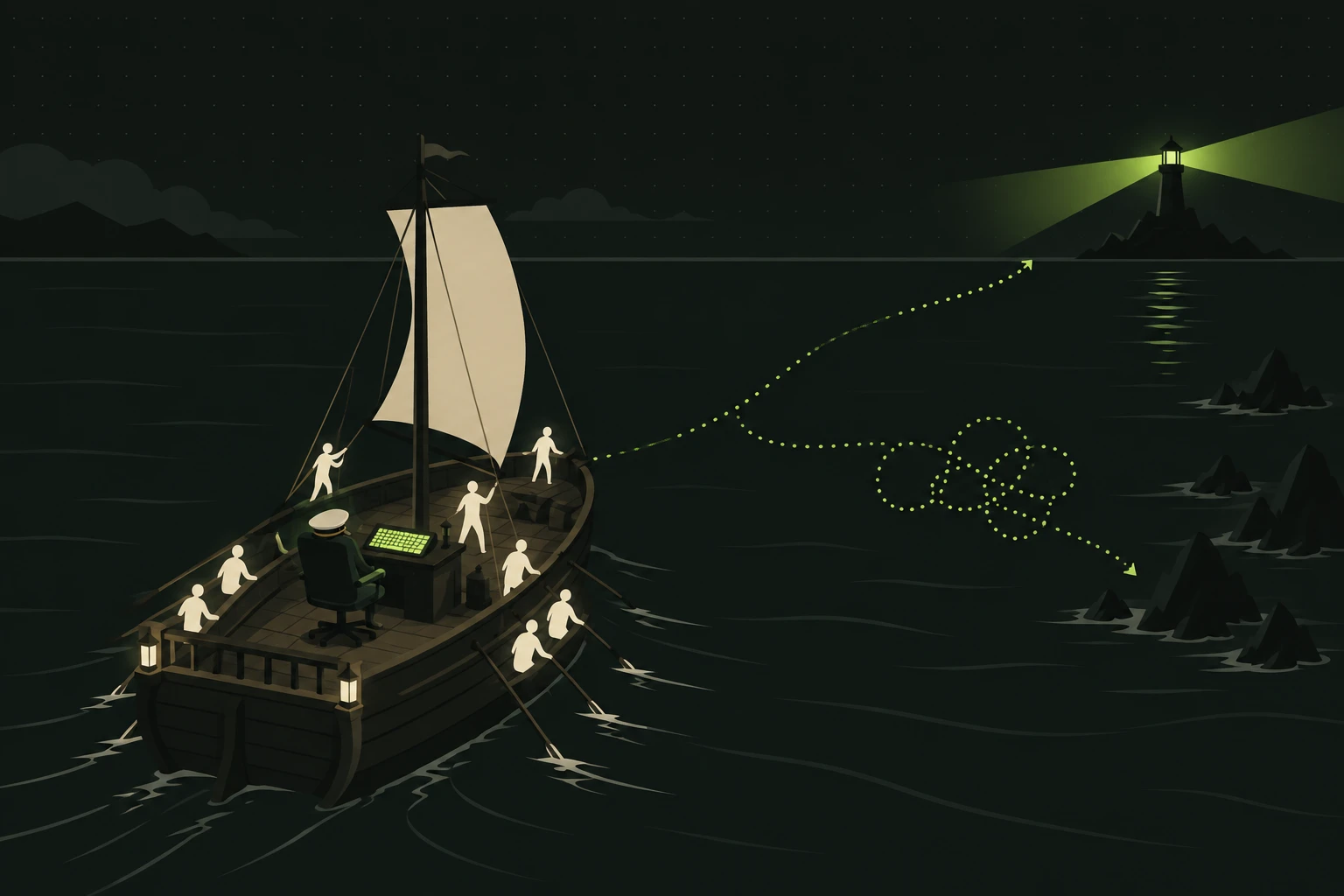
Everyone who uses AI brings their own baggage of knowledge, and becomes the captain of a ship. The AI is the crew, and the first officer too: it executes, suggests, sometimes corrects. But the captain sets the course. If the course is right, the voyage goes well and you get where you wanted to go. If the captain doesn't know what they want to do, the crew rows anyway, very fast, in every direction.
The mess
What comes out, in that case, is a confused mess. It might even work. But it has a short life, because nobody has it in their head: every change, every bug, every small tweak needs the AI again, because it's the only one that knows where to put its hands. You end up tied, tightly, to the tool that generated it.
And the time saved today isn't free. It's a loan, and it gets paid back later, with interest, every time someone has to understand what that thing does and why.
When the scope grows
Handing an architecture to AI works as long as the scope is small: a service, a script, a website. When systems start being distributed and you need to keep an eye on security, things change.
Not because AI isn't capable. Because it doesn't have the context. It doesn't know the customer's constraints, which compliance rules apply, how much the infrastructure can cost, who will run the system in two years and with what skills. Whoever is steering knows these things. And if they don't say them, or don't know them either, there's no guarantee the AI will notice it's doing things that go against the needs, and the good, of the person who asked for help. It does them well, and it does them fast. In the wrong direction.
That's why I see it as a multiplier. It multiplies skill, and it multiplies the lack of it.
Tokens that become tools
An example of what I consider good use.
At work I built a tool that creates Word documents on company letterhead straight from Markdown files. It looks like a silly little project, but it removed a lot of roadblocks in writing documentation: the technical side is used to writing Markdown, and clumsy with Word. If you've used it, you know: move a picture by a millimetre and all the furniture in the house moves with it.
Since nobody wants to use Word, that tool solved problems for a lot of people.
But the reason I consider it a good use of AI is another one. The alternative was having AI generate every document directly, with a huge waste on every round. Instead, I spent the tokens building a tool, which then does its job without AI. Turning tokens into tools that work on their own, instead of burning tokens every time to do the same job.
Stay the captain
So yes, let's use it. A lot. It's an incredible tool, and that's exactly why it has to be steered: decisions, reviews, security and responsibility stay with whoever is at the helm.
Because if the ship ends up on the rocks, it's not the crew's fault. The problem, as always, is between the chair and the keyboard.